
Peggy Shippen Arnold tells her side of the story.
The wife of America's most notorious traitor, played by local historian Char Weigel, says she had only the best of intentions.

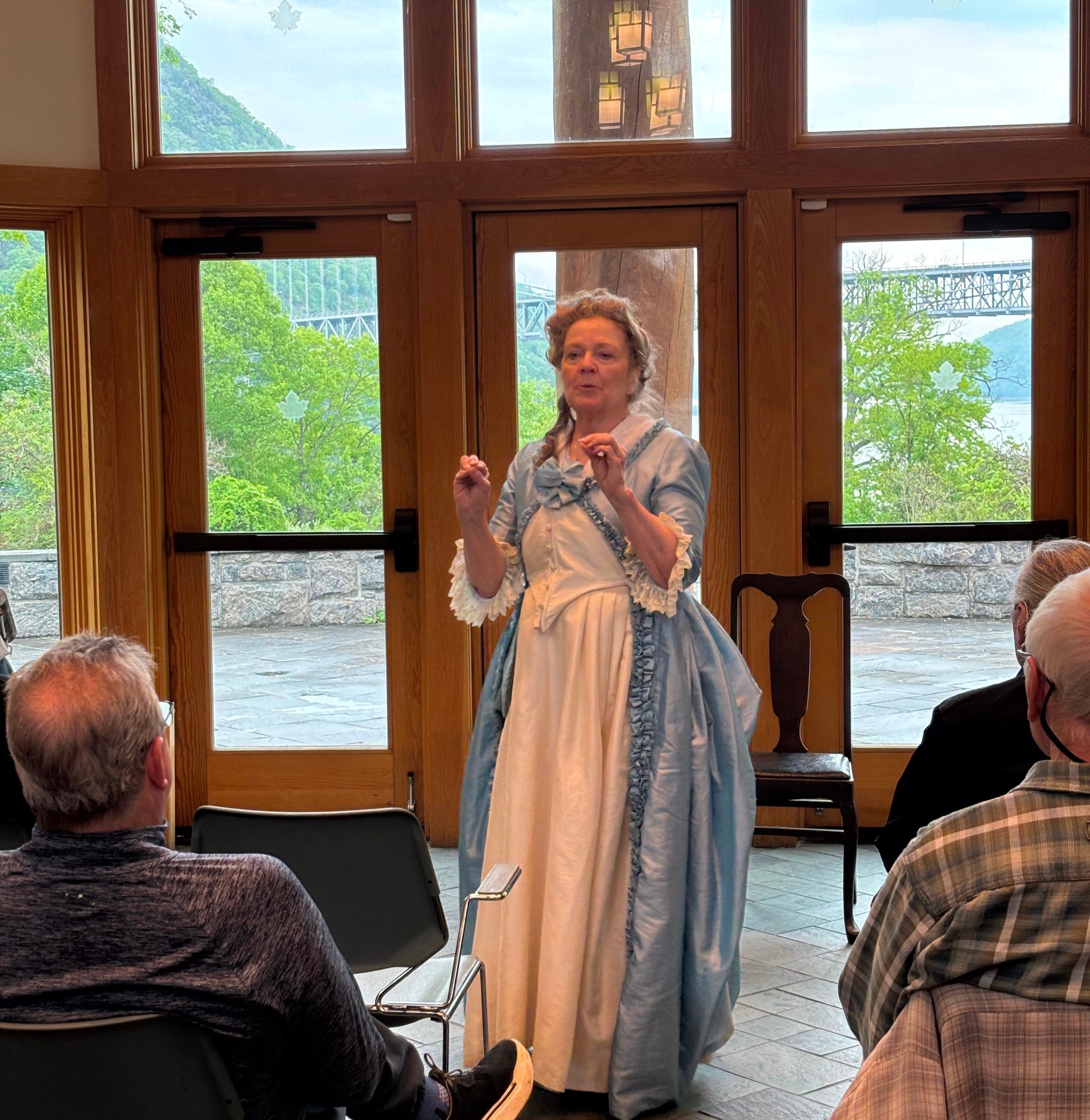
Char Weigel as Peggy Shippen Arnold at the Fort Montgomery State Historic Site with Bear Mountain Bridge in the background.
A couple of Sundays ago, Peggy Shippen Arnold, the wife of Benedict Arnold, made a rare appearance before an audience at Fort Montgomery, where in October 1777 the British won a tactical victory against American revolutionists but lost a strategic advantage that would eventually cost them dearly.
Not far up the Hudson River sits West Point, where Peggy’s husband, Benedict Arnold, was briefly in command; and not far downriver, the sites of the events that would expose Arnold’s British accomplice, John André, whose capture unraveled Arnold’s plot to turn over West Point to the British.
Peggy, dressed in traditional 18th century garb, was there at the Fort Montgomery State Historic Site to tell her side of the story. Many historians have concluded that she was a fully informed accomplice in Benedict Arnold’s plot, and some have gone so far as to claim that she was really the mastermind behind the whole conspiracy.
But Peggy (played by local historian Char Weigel, who is also Vice-President for Special Projects of Revolutionary Westchester 250 ) told a much more nuanced story—that is, if she is to be believed.
Peggy was only 17 when she met Benedict Arnold, and he was 38. Her father, Edward Shippen IV, was the chief justice of Pennsylvania, and had been able to remain neutral during the early days of the American Revolution—although his loyalties were suspect. The British had occupied Philadelphia in the fall of 1777, and the social gatherings at the family’s home featured a variety of guests—including John André himself.


Arnold began courting Peggy, but, she told the audience, her father worried that with his extensive injuries suffered during numerous battles as an officer in the American army, he would not be able to care for a family. Nevertheless, “Papa” eventually consented to the marriage, which took place in April of 1799.
Peggy said she doubted from early on that the Americans would be able to win the war. In Philadelphia, she had seen soldiers trying to buy goods with money issued by the Continental Congress, which was practically worthless at that time.
Peggy skipped lightly over the events that led Arnold to be exposed as a traitor, and focused mostly on the aftermath for her and her new baby son, Edward Shippen Arnold.
“I thought George Washington was going to come and kill me and my baby,” she told the gathering, as ripples of sympathy fluttered through the audience. But instead, Washington, as Arnold had asked as he fled from the swift justice he was likely to face from the Americans, offered Peggy a choice of safe passage to New York or to Philadelphia.
“It was the most important choice of my life,” Peggy said, as she chose Philadelphia, where her parents lived. She promised to turn over all of her correspondence with her husband as part of the bargain. But she was not welcome in the city, and later joined Arnold in New York. The Battle of Yorktown, in the fall of 1781, put an end to the couple’s life in America, and soon after they left for London.
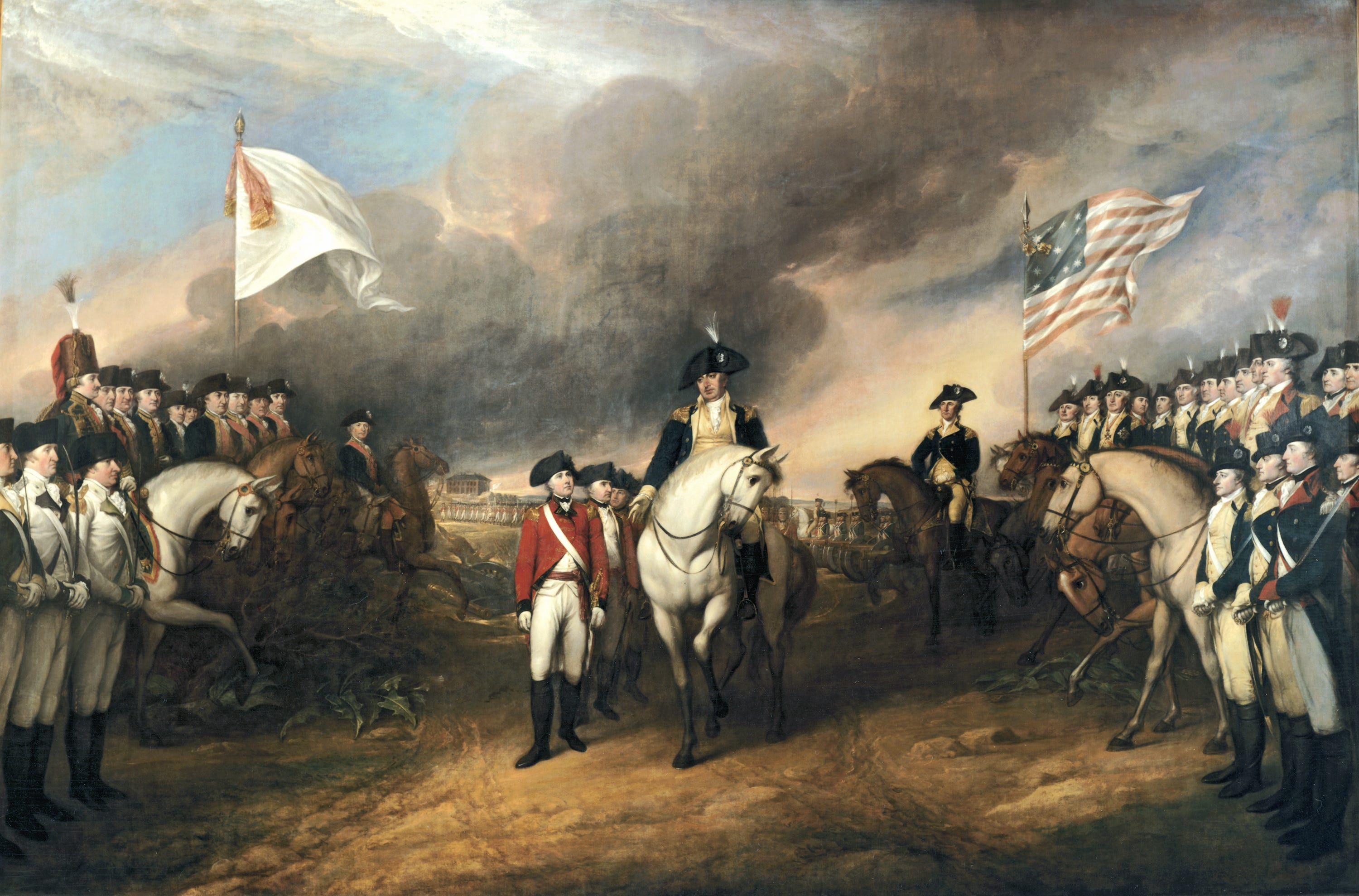
“I did not want to go,” Peggy said. America “was my home.” But as might be expected, she and Arnold got a very warm welcome in England.
“King George III and Queen Charlotte were so kind to us.” Arnold, whose military career was obviously over, began to pursue “mercantile activities,” which took him to New Brunswick, Canada for a while, where Peggy joined him. There were thousands of British refugees there. In 1789, Peggy says, she was able to return briefly to Philadelphia to visit her sisters and cousins, but then returned to London.
“The General,” as Peggy called Arnold throughout her talk, “was not doing well.” He was in debt, and the family had to sell some of its belongings. And when Arnold finally died in 1801, Peggy had to sell off much more to settle the debts.
“Money just flowed through the General’s hands,” she admitted, adding that he was always wanting his family to live better than his means.
During the Q&A session after her talk, Peggy was a little more forthcoming about her role in the plot, but defended both her husband’s actions and her own.
“I did know what the General was doing—it was his choice—and I helped to code and uncode a few letters,” she said. “I believed we were in the right. We were trying to bring the war to a close sooner.”
But she dismissed suggestions that she was the brains of the outfit. “People believe women are either devils or angels,” she said. “The truth was in between.” Peggy added, “I do wish the rebellion had not happened, that we had been one country. We could have withstood the French better.”
Peggy did not live very long after her husband’s passing. She died in London in 1804, and was buried together with Arnold at St. Mary’s Church in Battersea, southwest London.
As for Char Weigel—who uses her own original historical research to bring Peggy to life for a modern audience—she will be working overtime between now and July, helping to plan and celebrate Revolutionary Westchester 250, which will feature a host of events throughout the county. (For everything you need to know, please navigate to the project’s Website.)
In regards to Benedict Arnold, it’s unlikely there is much that can be done to salvage his reputation. He was a brilliant military officer, showed great courage in battle, suffered greatly for his initial allegiance to the American Revolution—and then made the tragic mistake of defecting to the losing side. Such are the vagaries of history and the choices we make, with which we have to live, sometimes far beyond our own lifetimes.
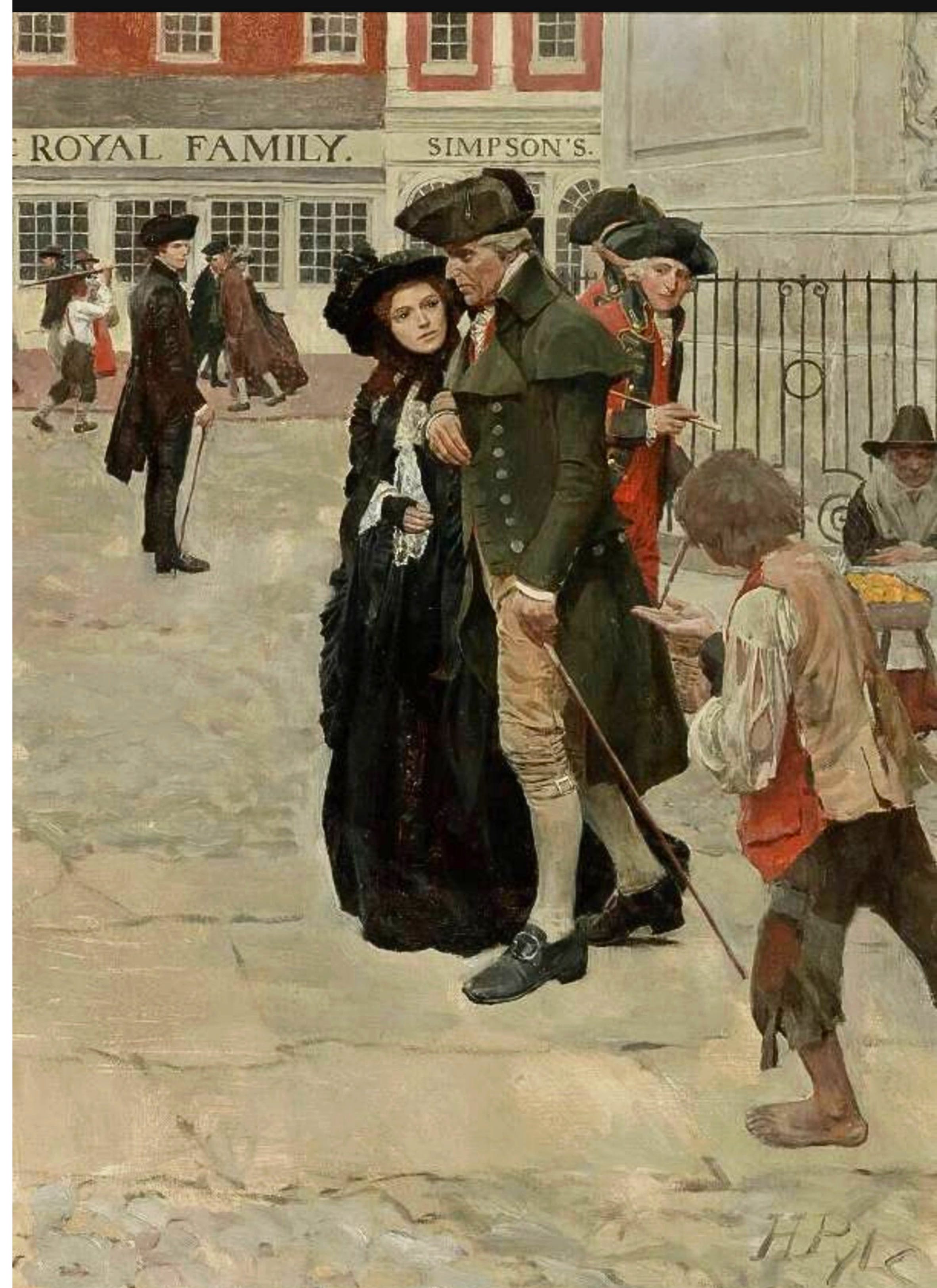
"Arnold and His Wife" by Howard Pyle circa 1897/ From the Brandywine River Museum online collection.
**********************************************************************************************
To share this post, or to share The Croton Chronicle, please click on these links.