
Lorraine Hansberry Day and Street Co-Naming Celebration at Croton's Bethel Chapel.
The celebrated playwright would have been 96 years old today. What would she be doing if she were still alive in Croton, where she was laid to rest in 1965 at age 34?


Today, May 19, is Lorraine Hansberry’s 96th birthday, or would have been, had she survived to celebrate it. Alas, the brilliant playwright and political activist died in 1965 from pancreatic cancer. She moved to Croton from Greenwich Village in 1962, in part to escape the frenetic life she was leading in Manhattan, especially after the huge success of her play “A Raisin in the Sun” turned her into a celebrity.
Hansberry is buried in Croton’s Bethel Cemetery. Ever since her death, the village has struggled with contradictory impulses to either embrace or reject her, or at least what she stood for.
Hansberry was a Black Lesbian Communist. She once remarked that she had been forced to choose “which of the closets was most important” to her. Nowadays many fewer people than in Hansberry’s time would fault her for being Black or a lesbian, although the stigma of being a Communist is still hard to shake.
But from the 1930s to the 1960s, many serious Black activists were members or fellow travelers of the U.S. Communist Party, for the simple reason that it took a much stronger stand against racism than the political liberals of the day—including the Kennedys, JFK and RFK, who had a “go slow” approach to civil rights and had to be prodded into taking action against violent opposition to desegregation in the South. Hansberry’s affiliations were shared by giants such as Paul Robeson and W.E.B. Du Bois.
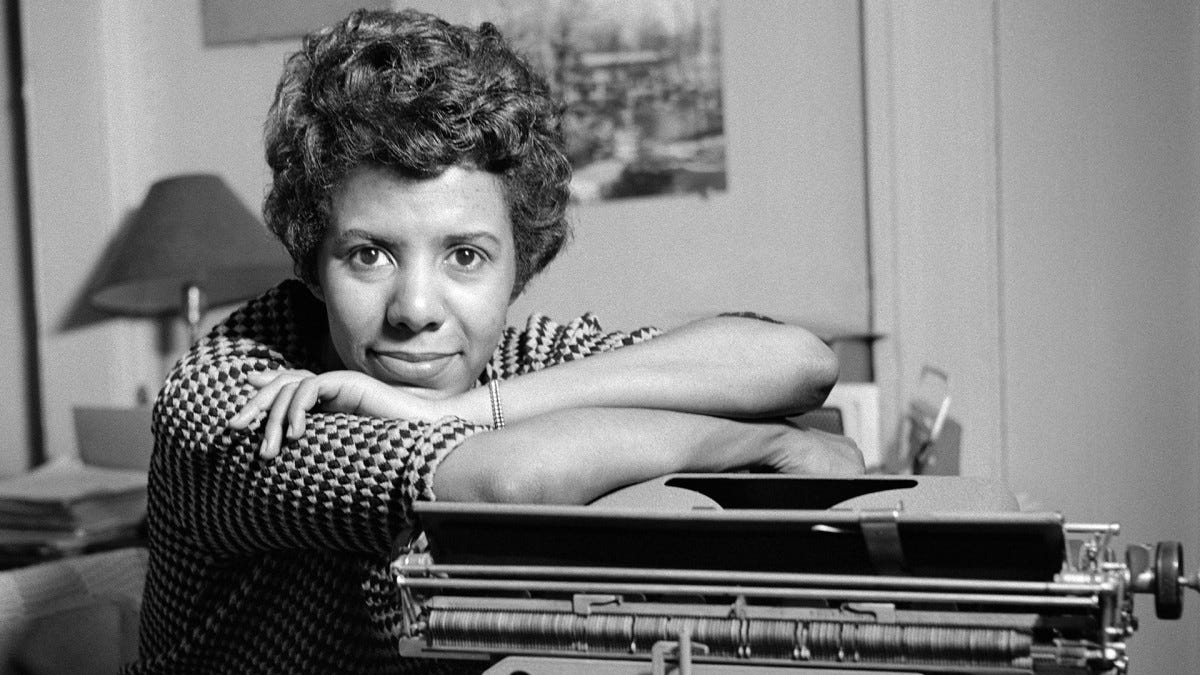
Hansberry mostly kept to herself in her house up in the Croton hills—especially after she became ill from cancer—but she occasionally made her mark in the village. Most famous was her co-organizing and chairing of the June 1963 "Rally in Support of the Southern Freedom Movement,” which gathered together some 1,000 participants at Temple Israel of Northern Westchester.
The rally raised some $5000, much of which went to purchase a Ford station wagon for the Freedom Riders who were then fighting to desegregate the South. Almost exactly a year later, the station wagon was found burned out near a swamp in rural Mississippi. The mutilated bodies of the three civil rights workers who had been riding in it, James Chaney, Andrew Goodman, and Michael Schwerner, were found a number of weeks later.
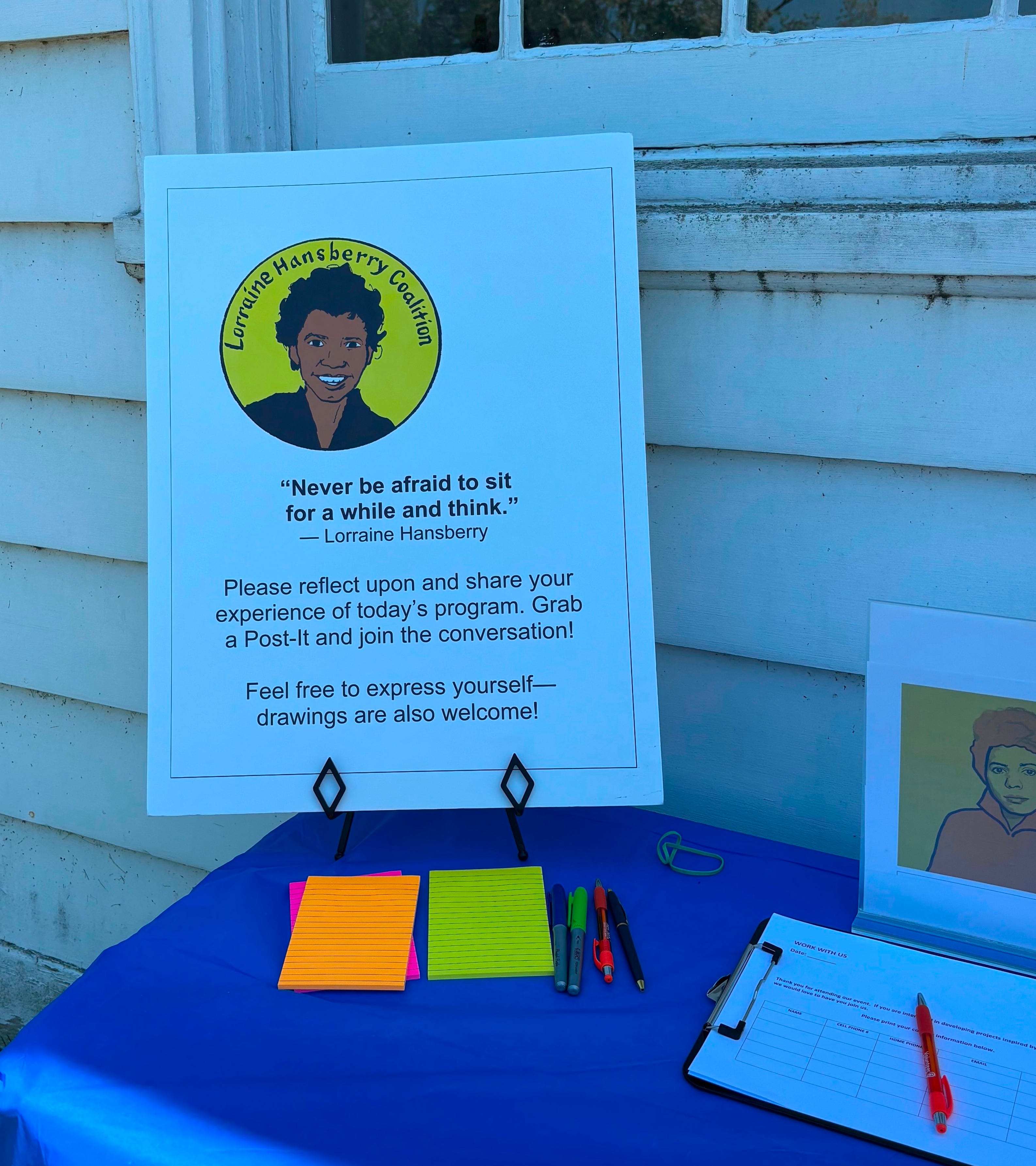
This past Sunday, Croton’s Lorraine Hansberry Coalition (LHC), which is marking its fifth anniversary this year, held its annual celebration of Hansberry’s life and achievements at Croton’s historic Bethel Cemetery, just up the hill from where she is buried. The afternoon was typical of the events the LHC has become noted for over the years: Moving, compelling, and filled with meaning, much as Hansberry’s life was while she lived it.
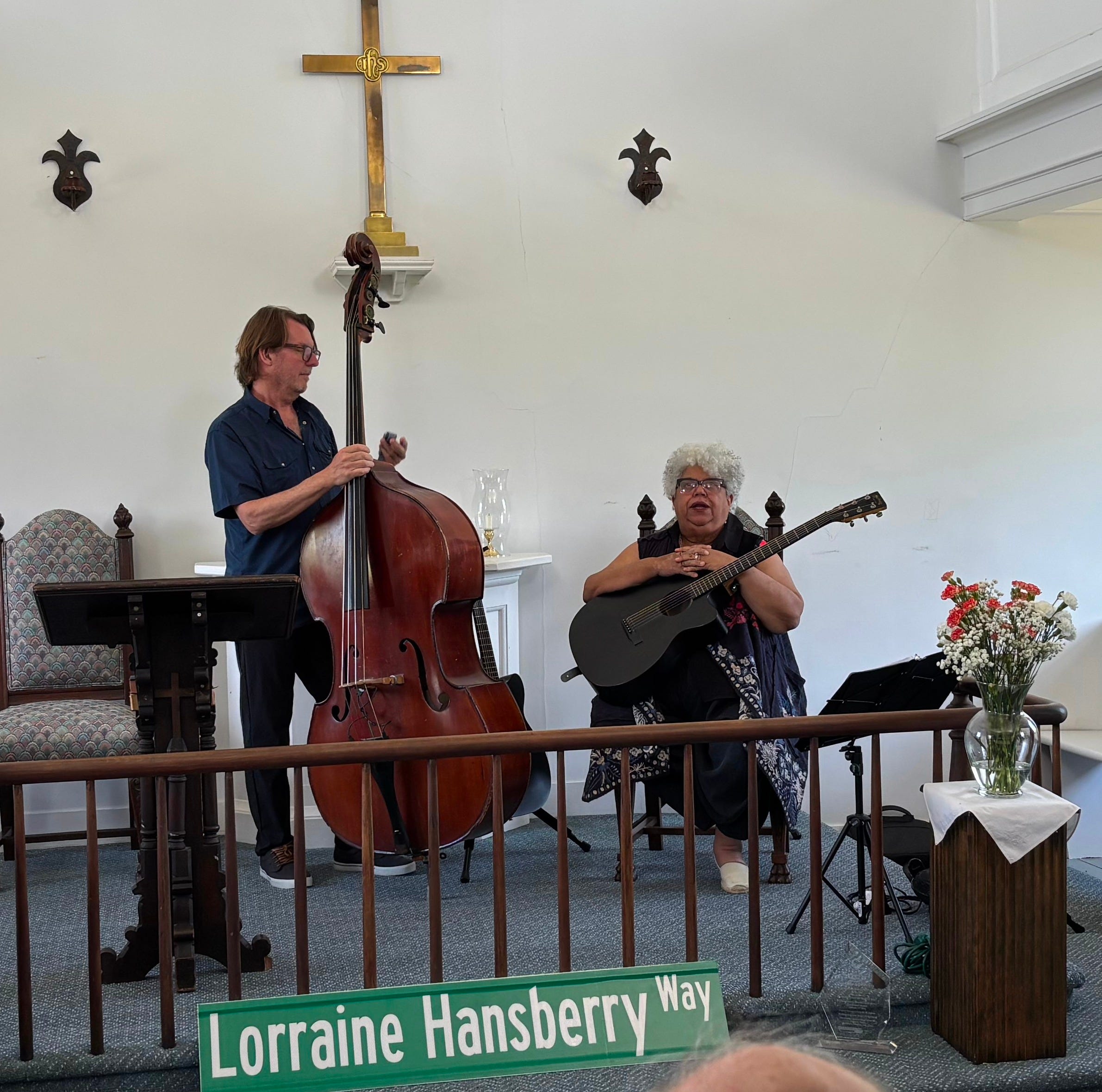
And, as is often the case with LHC events, there was great music. The headliners Sunday were songwriter, guitar player, and vocalist KJ Denhert, who is now living in Ossining, accompanied by bass guitarist Adam Armstrong, who moved from Australia to New York in 2020.
The program was opened by Lynda Jones, LHC’s co-chair (with writer Signe Bergstrom), who explained that the purpose of the coalition was to put on free public programs and events “in keeping with how Lorraine Hansberry lived her life.” She was, Jones added, a “loud and proud American” and also an “internationalist” who had taken a keen interest in the global liberation movements—notably the fight during the 1950s and 1960s against colonialism—as well as the struggle for civil rights in the United States.
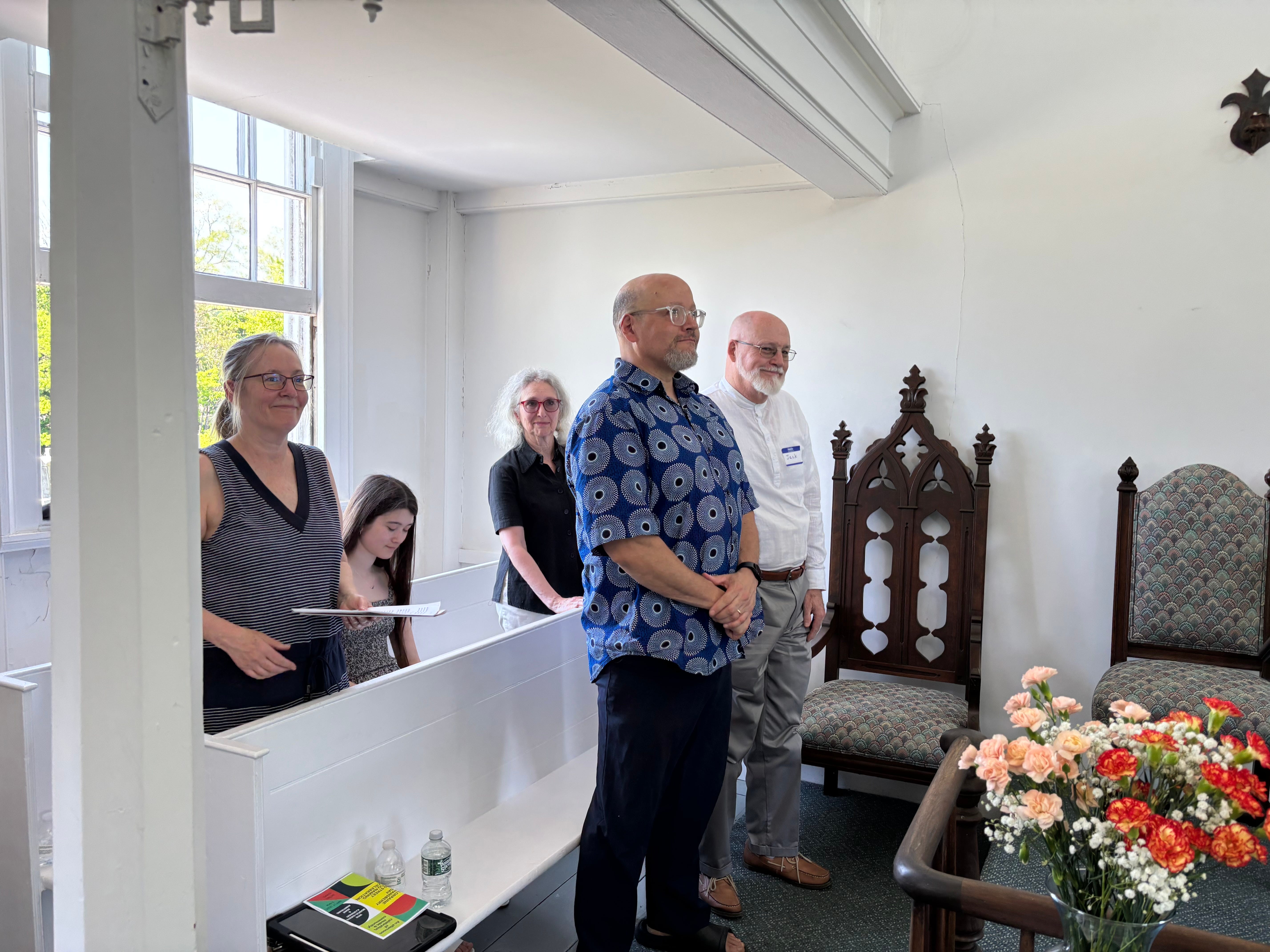
After a musical interlude from KJ Denhert and Adam Armstrong, members of the LHC gave a number of presentations about Lorraine Hansberry and the themes that were central to her life.
Christine O’Connor read a remembrance by Jordy Bell, who could not be present, of Hansberry’s early days in Croton; Alex Dyer related the history of his mixed-race family and the fight his parents had waged against housing desegregation (Dyer’s mother was a founder of the Croton Housing Network, and of course housing desegregation was central to the complex themes in “A Raisin in the Sun”); and graduating Croton-Harmon High School student Maya Sebestyen talked about the interest she had first developed in Lorraine Hansberry back when she was a freshman.
Some Chronicle readers may recall our story about an LHC event in February 2024, which featured a film made by Maya Sebestyen and three other CHHS students, based on oral history interviews they conducted with Croton residents who knew Hansberry. As we reported then:
“For the film, the students interviewed three Crotonites who knew Hansberry in various ways: Cornelia Cotton, who met her at her Croton house when she was delivering telephone books one day; Lois Waldman, who invested in Hansberry’s second play, “The Sign in Sidney Brustein’s Window;” and civil rights activist Seth Davis, whose parents were close friends of the family of Hansberry’s husband, Robert Nemiroff, and who lived in Croton between 1955 and 2015.”

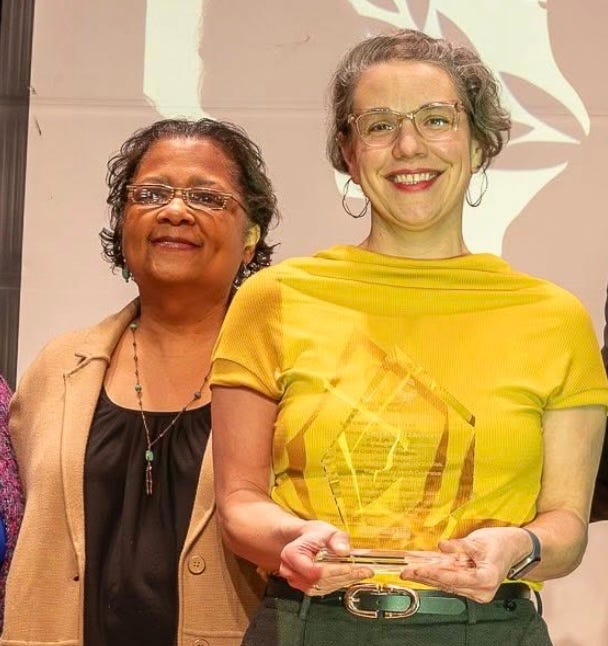
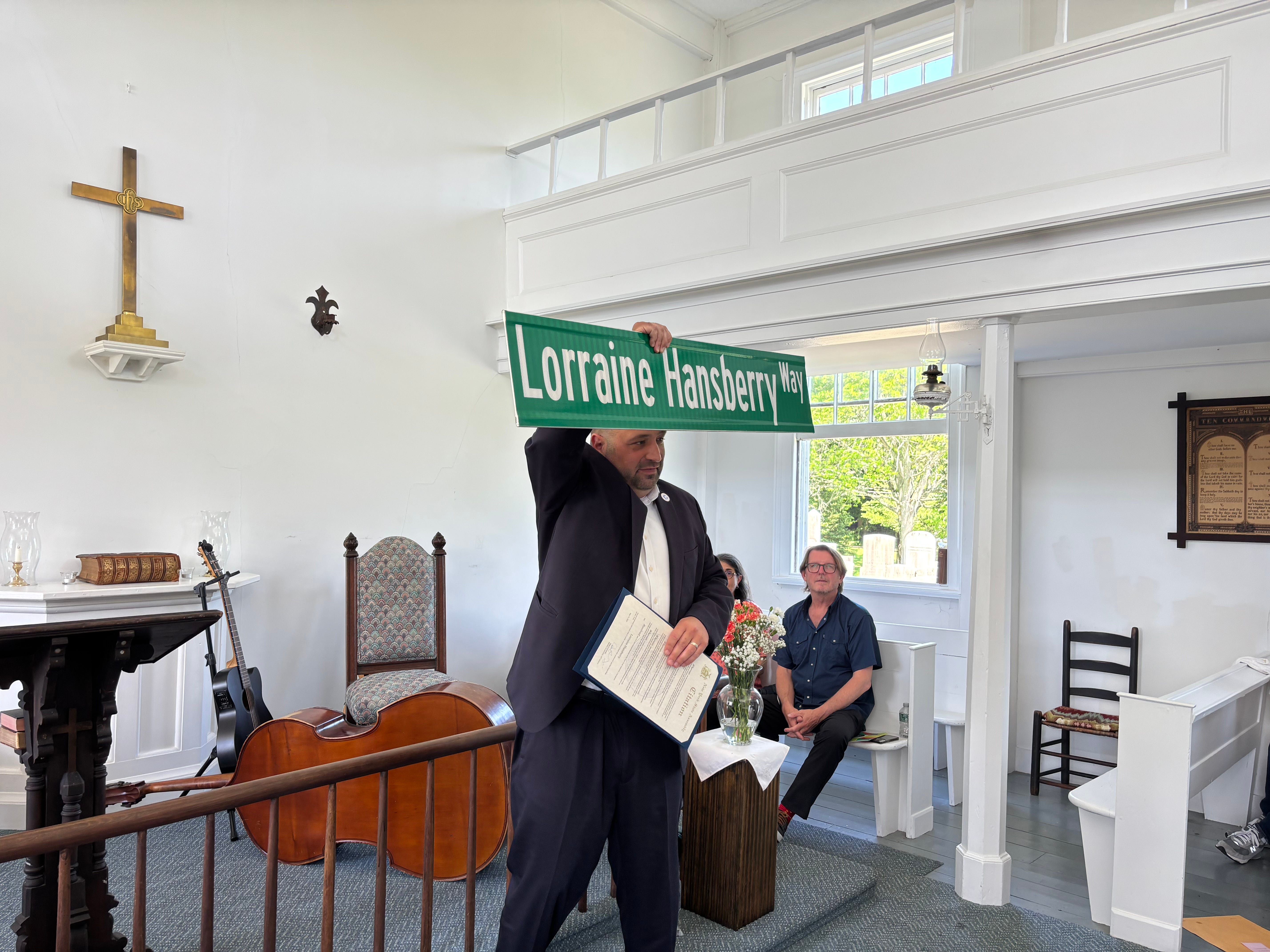
It was then Mayor Brian Pugh’s turn to speak. In addition to displaying the Westchester County Trailblazer Award, one of which had been posthumously given to Lorraine Hansberry earlier this year and accepted by the LHC on her behalf, Pugh also showed the gathering one of the “Lorraine Hansberry Way” signs that will soon be placed along Cleveland Drive in the vicinity of Bethel Cemetery.
Earlier this year, the Croton Board of Trustees adopted a proposal by the LHC to co-name a section of Cleveland Drive for the playwright, similar to the honors that have been paid to some former mayors (co-naming, rather than re-naming, means that the street will retain its original name.)
Pugh pointed out that Bethel Cemetery is also the resting place of John “Rifle Jack” Peterson, a Black soldier who fought in local battles of the American Revolution, suggesting a connection between African-American history—of which both Peterson and Hansberry were certainly a part—and the fact that many veterans are buried in the cemetery.
What Pugh did not mention, but might have, is that Hansberry was a strong peace advocate who criticized the Korean War and the continuing development of nuclear weapons. Indeed, this was part of what Lynda Jones was no doubt referring to when she called Hansberry an “internationalist.” Although serious opposition to the Vietnam War was just getting underway when Hansberry died in early 1965, she did speak out against it as well. Many today think her peace activism represented the true spirit of supporting our GIs and veterans—in contrast with the actions of the presidents who sent them off to die in meaningless and immoral wars.
After Pugh spoke, the audience heard two more presentations by LHC members: Maria Modica-Snow, a retired local attorney, who talked about the history of the legal fight against housing desegregation, in which Hansberry’s father played an important role (thus inspiring his daughter’s famous play); and Jack McClung, a retired physician, who described Hansberry’s relatively brief time in Croton.
The program ended in celebratory fashion with more music by KJ Denhert and Adam Armstrong (see a short video clip below.)
One fleeting but important moment of the afternoon was when Croton-Harmon high school student Maya Sebestyen described talking with one of her interview subjects about what Lorraine Hansberry would be doing were she alive today. The answer, in effect, was that she would continue to be active and fight for the principles that she cared deeply about. As we wrote two years ago, in our story about the film that Maya and her fellow students made, that seems very likely:
“Hansberry was a militant civil rights activist, a political radical, a partially out lesbian, married for a number of years to a Jewish Communist. If Hansberry were alive today she might not keep herself mostly cloistered in her house off Quaker Bridge Road.
Perhaps Hansberry would come down from the hills of Croton from time to time to have coffee at The Black Cow, and perhaps even host political discussions around the coffee house’s long center table. She might even write letters to The Gazette lamenting the death toll in Gaza.”
One thing is sure: Lorraine Hansberry would be a controversial figure in Croton if she were alive today, generating mixed reactions of admiration and hostility as she urged fellow villagers to fight against racism and for a better world. That is reason enough to keep her memory and her spirit alive, and to salute the members of the Lorraine Hansberry Coalition for their determined work to make that happen.
*********************************************************************************************************
To share this post, or to share The Croton Chronicle, please click on these links.
Comments policy: No hate speech, personal attacks, or trolling. Please be polite and respectful at all times.